
Defining Employee Share Ownership
Employee share ownership is a broad term for any arrangement that enables employees to acquire a meaningful ownership stake in the company they work for. This can happen through formal programmes like ESOPs (Employee Stock Ownership Plans), RSUs (Restricted Stock Units), SARs (Stock Appreciation Rights), or direct share purchase plans.
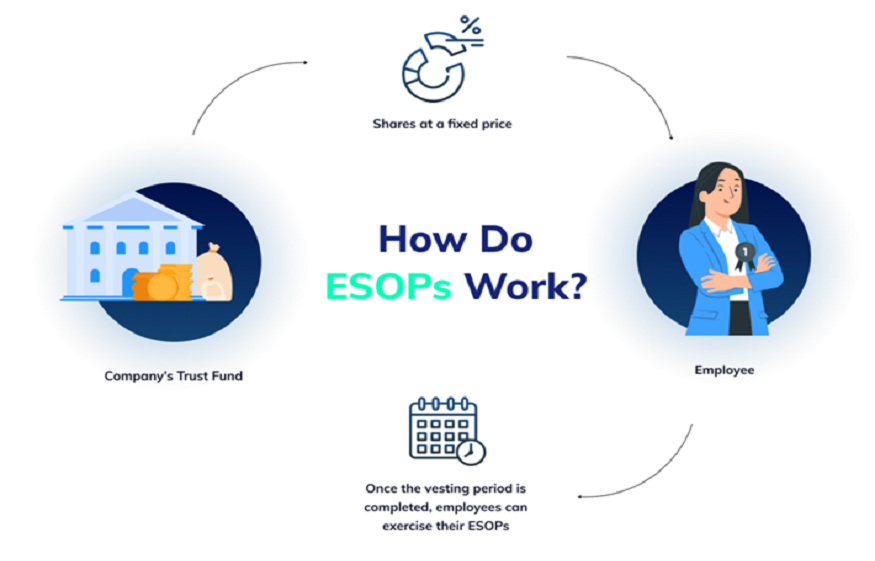
Understanding what is esop specifically is important: an ESOP grants the employee the right — but not the obligation — to purchase company shares at a predetermined price (exercise price) during a defined window after a vesting period. If the share price at the time of exercise is higher than the exercise price, the employee realises a financial gain.
Why It Matters for Career and Wealth Planning
Employee share ownership aligns the employee’s financial interests with the company’s long-term success. When a company grows, so does the value of employee ownership stakes. This alignment is a key reason companies offer ESOPs — it motivates employees to think and act like owners.
Read More: What Drives Current Mortgage Loan Interest Rates and How to Get the Best Deal
For working professionals, this can mean a significant addition to their net worth over time. At Indian startups and tech companies, employees who received ESOPs in early funding stages have realised wealth many times their annual salaries when companies went public. Even at established listed companies, ESOPs represent a steady return on loyalty and contribution.
The Mechanics of Employee Share Ownership Through ESOPs
When a company grants ESOPs, it defines a grant size (number of options), an exercise price (typically the fair market value on the grant date), a vesting schedule, and an exercise window. The employee pays the exercise price to convert options into shares. The shares can then be held for long-term appreciation or sold in the open market (if listed) or through secondary platforms (if unlisted).
Read More: How a Simple Interest EMI Calculator Helps You Plan Loan Budgets Accurately
The value created equals the number of shares multiplied by the difference between the market price and the exercise price, minus applicable taxes.
Risks and Considerations
Employee share ownership is not guaranteed wealth. For pre-IPO or startup employees, the shares are illiquid — they cannot be sold until a liquidity event. If the company fails or is sold at a low valuation, the options may be worth less than the exercise price (underwater options) and would rationally not be exercised.
With Bajaj finance Tax planning is also essential — exercising a large tranche of options in a single financial year can push the perquisite income into the highest tax bracket. Spreading exercises across financial years or using ESOP financing to exercise without depleting cash can help manage this.
Making Employee Share Ownership Work for You
The best approach is to stay informed: read your ESOP agreement, track your vesting schedule, understand the valuation of your company, and consult a financial advisor before major decisions like exercise timing, sale decisions, and tax planning. Employee share ownership can be a powerful wealth-building tool — but only for those who engage with it actively and strategically.